
"Dry Eczema": Hydrating Management & Practical Advice
This content does not replace the discussion with your healthcare professional. Be sure to ask your healthcare professional about any questions or concern you may have.
Summary
What is "Dry Eczema"?
A Clinical Presentation of Eczema 1,2,3
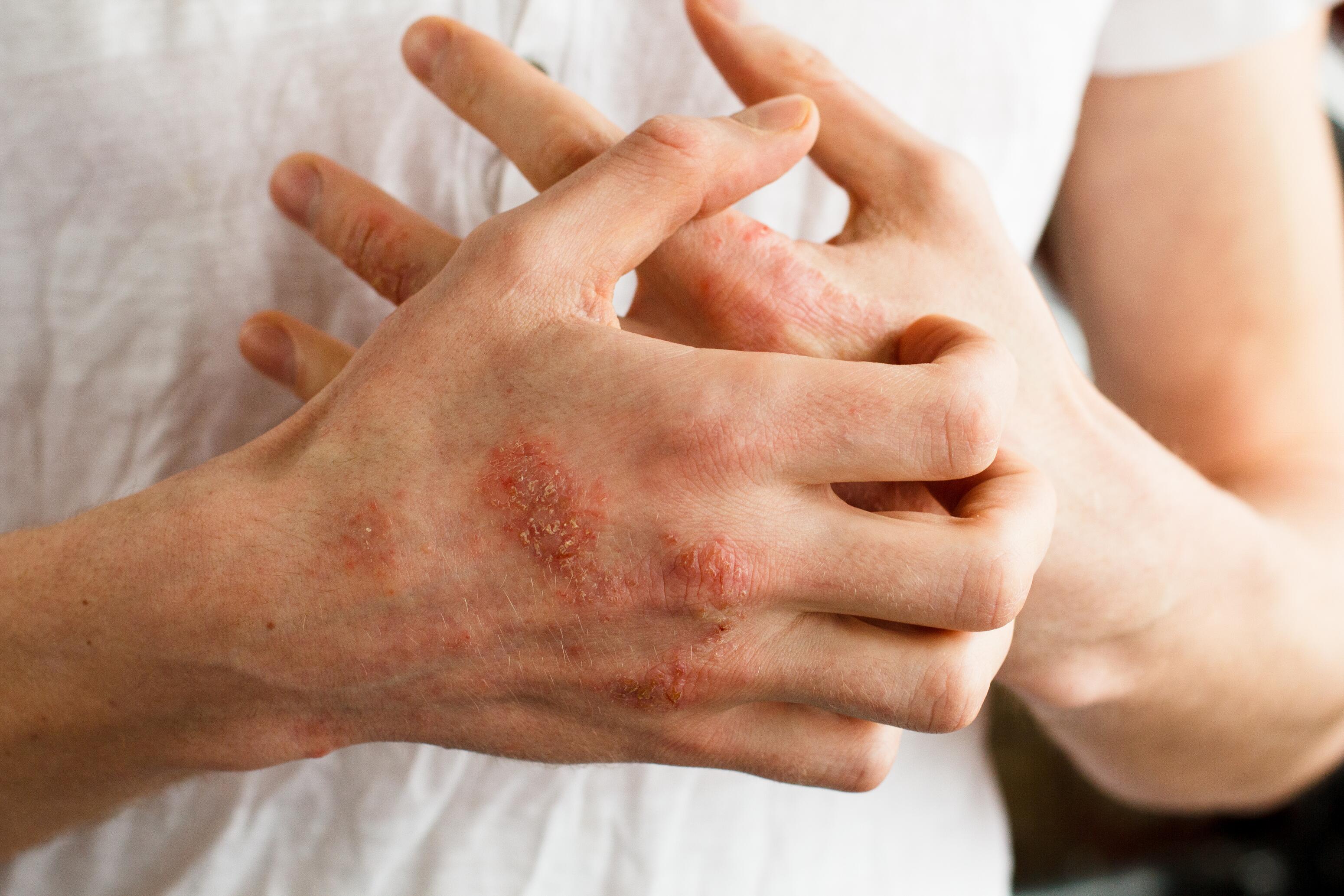
The expression "dry eczema" is used in everyday language but doesn’t refer to a distinct type or category of eczema. Much like "weeping eczema" or "lichenified eczema," "dry eczema" describes a clinical presentation of the condition. In that case, dry skin is a prominent symptom, often seen in children with atopic dermatitis.
Typically, eczema progresses with small blisters filled with clear fluid on the surface of lesions. These blisters break, leading to weeping (the weeping phase), which then dries into crusts. However, in some cases, blisters are minimal on the eczema patches, and dry skin, scales, and redness dominate the symptoms.
Thus, the terms "dry eczema" and "weeping eczema" can describe two phases of the same disease that may alternate in the same person over time.
Characteristic Symptoms of Eczema 1,2,3
The primary symptom of eczema is dry skin, leading to intense and persistent itching. Other symptoms include redness and scales. The skin affected by eczema often feels tight and cracked, exacerbating discomfort and feelings of tightness.
Asteatotic Eczema 3,4
Asteatotic eczema is a specific form of the condition characterized by extremely dry, flaky skin with red cracks. It mainly affects older individuals on the front of their legs in cold and dry weather.
Symptoms of asteatotic eczema include dry skin, cracks, itching, redness, and burning sensations. Without treatment, these cracks can deepen, forming painful sores with a risk of infection.
Causes of Eczema 1,2
The causes of eczema are multifactorial:

Genetic and Hereditary Factors
Genetics plays a role in eczema. People with a history of atopic dermatitis or allergies often have a common mutation in the filaggrin gene, a protein essential for the skin's integrity.
Immune System Imbalances
An abnormal immune response (Th2 type) to common allergens causes excessive skin inflammation, leading to symptoms.

Skin Barrier Dysfunctions
Eczema is associated with skin abnormalities. Particularly in atopic dermatitis, there are dysfunctions in filaggrin, an essential protein for the formation and hydration of the skin's upper layer. A decrease in natural moisturizing factors (NMF) worsens skin dryness, and increased skin permeability makes it easier for irritants, allergens, and pathogens to penetrate.

Environmental Factors
Various environmental factors can contribute to eczema:
- Climate conditions: Exposure to dry environments due to climate or excessive use of heating and air conditioning can dehydrate the skin and exacerbate symptoms.
- Hygiene habits: Too frequent and too hot baths and showers, use of irritating cleansing products or cosmetics.
- Irritants and chemicals: Wool and synthetic textiles, perfumes, soaps, detergents, solvents, and certain cosmetics.
- Food allergens: In some atopic individuals, especially children and infants, eating foods they're allergic to (eggs, peanuts, seafood, nuts) can trigger an eczema flare-up.
Stress and Emotional Factors 2,5
Stress can also influence the onset and severity of eczema by disrupting the immune system and skin barrier.

Solutions and Management for Eczemas with Significantly Dry Skin
Hydration: The Key Role of Emollient Creams 1,6
Hydrating with emollients, is the cornerstone of eczema management. Emollients help restore the skin barrier, reduce dryness, and soothe itching. By forming a protective layer on the skin that retains moisture, these creams are key for skin hydration.
Thermal Cures 7,8
Thermal cures are a widely used natural management for eczema. Rich in minerals and trace elements, thermal waters soothe dry skin and relieve itching and irritation. Stays in thermal centers can also include dietary advice and skincare tips, contributing to a holistic management of eczema.
Practical Advice for Daily Management of Eczema 1,6
Several daily measures can be carried out for eczema prevention:
- Apply an emollient, ideally within minutes of showering or bathing, to maintain skin hydration.
- Take short showers or baths, 5 to 10 minutes, with lukewarm water, and use gentle, soap-free cleansers.
- Dry your skin by dabbing, not rubbing.
- Wear clothes made of natural fibers (cotton, linen). Avoid irritating materials such as wool and synthetic fabrics.
- At home, maintain comfortable humidity and cool temperatures.
- For stress prevention, engage in relaxing activities.
- Identify and eliminate potential allergens from your environment.
- Wear gloves when using cleaning products and reinforce the application of emollients during winter when the weather is cold and dry.
- Consult your dermatologist for regular follow-up.
The Importance of choosing the products for Dry Skin

Selecting products suitable for Dry Skin 1,6
Managing and preventing eczema requires a careful selection of products to try to maintain skin health and minimize discomfort related to dryness and inflammation. Here are some dermatological tips for eczema with significant dry skin:
- Appropriate hydrating products: Choose emollients specially formulated for dry, very dry, or atopic skin without irritating or allergenic ingredients such as fragrances, parabens, alcohols, dyes, and preservatives for example.
- Choice of ingredients: You could favour a product with a simple, hypoallergenic formula. Certain agents could help maintain hydration, such as glycerol which retains moisture, others can offer protective action and help restore the skin barier such as vasline and paraffin for example.

- Be aware of irritants: Somes products may contain detergents and fragrances that can be irritating or allergenic.
- Gentle cleaning products: Use mild and hydrating cleansers that are soap-free.

- Dermatological advice: If unsure about the appropriate products for your eczema, a dermatologist can guide you toward suitable skin care
References
1. Nemeth V, Evans J. Eczema. In: StatPearls. Treasure Island (FL): StatPearls Publishing; 2023 Jan. [Disponible sur :] https://www.ncbi.nlm.nih.gov/books/NBK538209/
2. Specht S, Persaud Y. Asteatotic Eczema. In: StatPearls [Internet]. Treasure Island (FL): StatPearls Publishing; 2023 Jan. [Disponible sur :] https://www.ncbi.nlm.nih.gov/books/NBK549807/
3. Arndt J, Smith N, Tausk F. Stress and atopic dermatitis. Curr Allergy Asthma Rep. 2008 Jul;8(4):312-7.
4. National Eczema Society. Emollients Factsheet. National Eczema Society. 2023 Jun. [Disponible sur :] https://eczema.org/wp-content/uploads/Emollients-Jun-23.pdf
5. Wollenberg A and al. Consensus-based European guidelines for treatment of atopic eczema (atopic dermatitis) in adults and children: part II. J Eur Acad Dermatol Venereol. 2018 Jun;32(6):850-878.
6. Cacciapuoti S and al. The Role of Thermal Water in Chronic Skin Diseases Management: A Review of the Literature. J Clin Med. 2020 Sep 22;9(9):3047.
7. Shi K, Lio PA. Alternative Treatments for Atopic Dermatitis: An Update. Am J Clin Dermatol. 2019 Apr;20(2):251-266.
8. Donno D and al. Biomolecules and Natural Medicine Preparations: Analysis of New Sources of Bioactive Compounds from Ribes and Rubus spp. Buds. Pharmaceuticals (Basel). 2016 Feb 5;9(1):7.
9. Wollenberg A and al. European guideline (EuroGuiDerm) on atopic eczema - part II: non-systemic treatments and treatment recommendations for special AE patient populations. J Eur Acad Dermatol Venereol. 2022 Nov;36(11):1904-1926.